


Nowości
drukpdfepubmobi
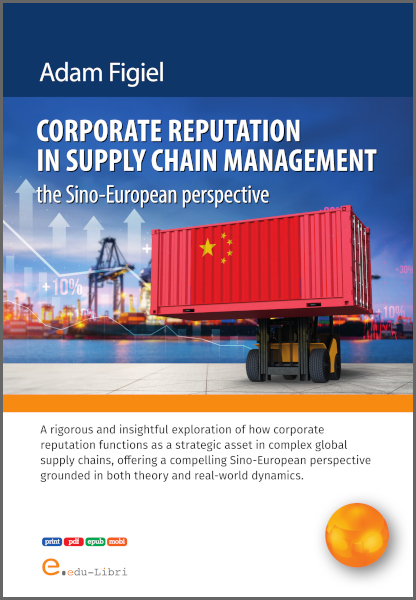
Corporate reputation in supply chain management – the Sino-European perspective
nowość
Adam Figiel
Recenzent: dr hab. Marta Mańkowska, prof. US
Publikacje elektroniczne
czytelnia on-line ibuk.plebookpoint.plgdzie kupić/przeczytać
| 1,6 MB ISBN: 978-83-68441-24-6 | |
| ePUB | 1,7 MB ISBN: 978-83-68441-25-3 |
| MOBI | 2 MB ISBN: 978-83-68441-26-0 |
czytelnia on-line ibuk.plebookpoint.plgdzie kupić/przeczytać
Publikacja drukowana
gdzie kupić/przeczytać
80.00 PLN
oprawa miękka, klejona
format: B5
liczba stron : 110
wydana: kwiecień 2026
ISBN: 978-83-68441-33-8
format: B5
liczba stron : 110
wydana: kwiecień 2026
ISBN: 978-83-68441-33-8
gdzie kupić/przeczytać
opis | spis treści | |||
|---|---|---|---|---|
Kategorie Thema: KJS Sprzedaż i marketing KJK Międzynarodowy biznes KJMV7 Zarządzanie sprzedażą KJMV9 Zarządzanie logistyką i dystrybucją Praca o tym, jak reputacja przestaje być jedynie elementem wizerunku czy komunikacji, a staje się strategicznym mechanizmem zarządzania zaufaniem, ryzykiem i współpracą w złożonych, transnarodowych sieciach dostaw. Autor traktuje reputację jako zasób strategiczny i jednocześnie mechanizm ładu w sieciach międzyorganizacyjnych, w których zaufanie, przejrzystość i zgodność regulacyjna warunkują dostęp do rynków, partnerstw i finansowania. W centrum rozważań znajdują się: instytucjonalne i kulturowe kontrasty UE – Chiny, rosnąca rola reżimów ESG oraz unijnych dyrektyw CSRD/CSDDD, a także oddziaływanie cyfryzacji, blockchainu, AI i cyberbezpieczeństwa na budowanie oraz ochronę reputacji w łańcuchach dostaw. Autor proponuje ujęcie hybrydowe: łączy europejską logikę compliance i transparentności z chińską logiką relacyjną (guanxi, mianzi), pokazując, że skuteczne zarządzanie reputacją w relacjach UE–Chiny wymaga mediacji między odmiennymi systemami normatywnymi. A work on how reputation ceases to be merely an element of image or communication and becomes a strategic mechanism for managing trust, risk, and cooperation in complex, transnational supply networks. The greatest advantage of this book is that it redefines reputation as a key element of global supply chain management, doing so in a theoretically mature, empirically grounded, and practically useful way, especially in one of today's most important economic systems: China-Europe relations. The book will remain relevant even after regulatory changes because it deals with addresses underlying mechanisms. No Polish publication offers such a transcultural model of reputation in supply chains. It offers a better fit for the realities of platforms, ecosystems, and global networks. It explains why technology changes the logic of reputation, not just how to implement it.
| ||||
Parę słów o edu-Libri:
O nas i naszych celach
Wydanie książek
(procedura wydawnicza)
Konwersja
Zasady etyki wydawniczej
Autorzy i Recenzenci
O nas i naszych celach
Wydanie książek
(procedura wydawnicza)
Konwersja
Zasady etyki wydawniczej
Autorzy i Recenzenci
Gdzie kupić / przeczytać
Co to jest e-książka:
Zalety e-książki
Formaty PDF, EPUB, MOBI
Jaki wybrać format e-książki
Co to jest e-książka:
Zalety e-książki
Formaty PDF, EPUB, MOBI
Jaki wybrać format e-książki
Dla Autorów:
Zapraszamy do współpracy
Proces wydawniczy
Zasady etyki wydawniczej
Jak przygotować pracę
Kontakt
Zapraszamy do współpracy
Proces wydawniczy
Zasady etyki wydawniczej
Jak przygotować pracę
Kontakt
Wszystkie znaki firmowe lub towarowe należą do ich właścicieli.
Zostały one użyte na stronie www (poza boksami reklamowymi) jedynie w celach informacyjnych.
Zostały one użyte na stronie www (poza boksami reklamowymi) jedynie w celach informacyjnych.